
The Saltwater Survival Guide: How to Prevent PWC Corrosion.
Here is the inconvenient truth about owning a PWC in a saltwater environment: Corrosion is never 100% avoidable.
At Odyssea Jet & Prop Shop, we see it every single week. We diagnose electrical gremlins, seized bearings, and "brittle" wiring harnesses that could have been completely prevented. The "Saltwater Tax" is real, but it doesn't have to be expensive.
While you can’t make your machine immune, you can massively slow the damage. If you follow this 6-step Saltwater Survival Routine after EVERY SINGLE RIDE, you will spend less time in our shop, less money on repairs, and more time on the water with your friends and family.
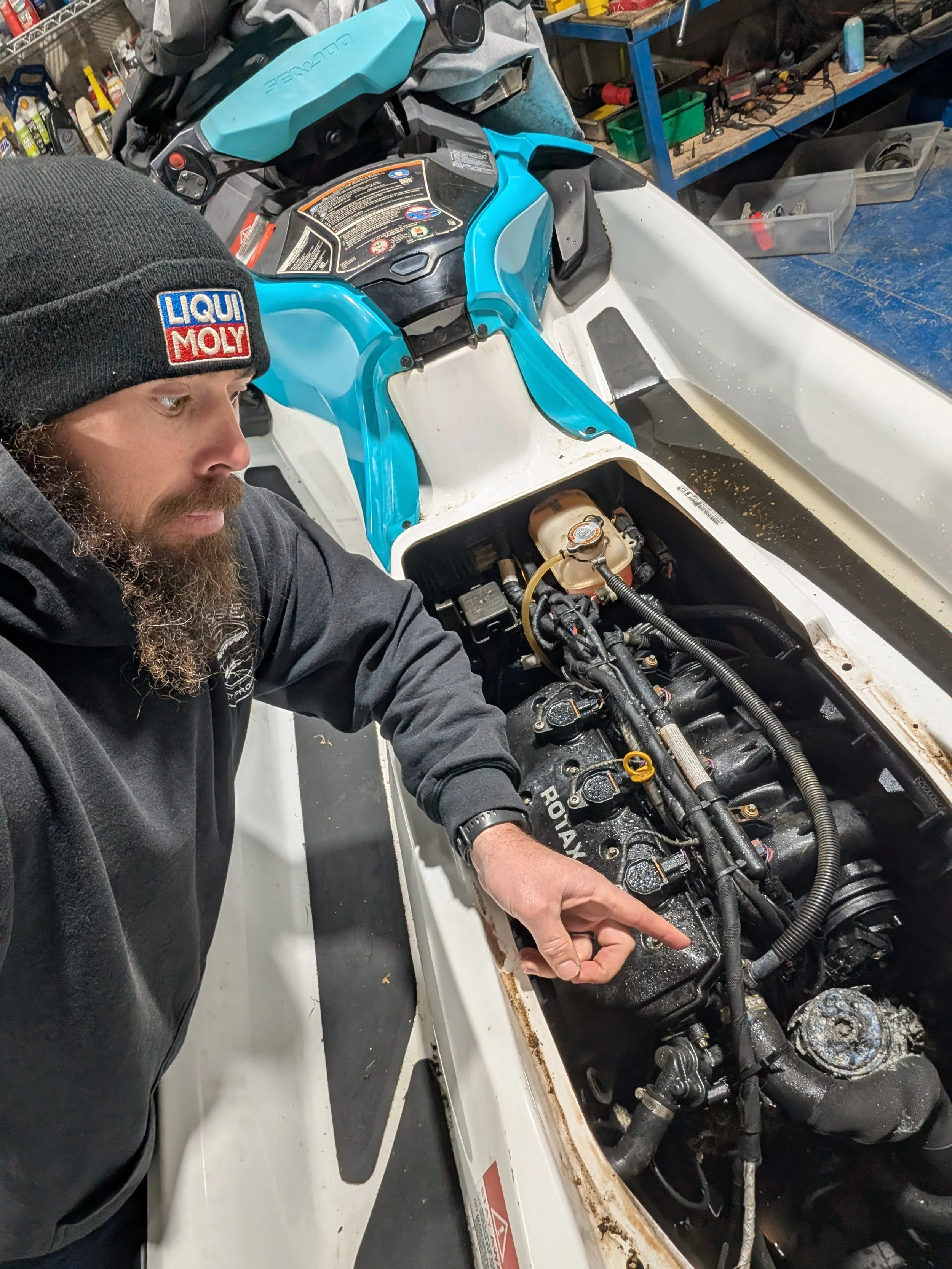
Step 1: The Flushing Protocol (Precision Matters)
This is where most owners make their first critical mistake. You are flushing the internal cooling system of the engine, not the exterior. The order is everything.
The Golden Rule of Flushing: Engine ON first, Water ON second. When finished, Water OFF first, Engine OFF second. Failing to do this can flood your engine and instantly ruin your weekend (and bank account).
The Stopwatch is Your Best Friend: Different manufacturers have different technical requirements. Setting a timer is not a "Monster" build flex—it's a mechanic-required safety step.
Sea-Doo (Rotax Engines): Flush for 60 seconds maximum.
Yamaha & Kawasaki: Flush for 2 minutes.
Pro-Tip: For maximum "salt-killing" power, use a product like Salt-Away or a similar saltwater dissolving solution in your flush mixer. This neutralizes the salt on contact rather than just diluting it.
Step 2: Wash, Rinse, & Dry
After the internal flush, it’s time to tackle the exterior. This is about more than just a quick spray. Salt spray creates a micro-layer of abrasive, conductive film on everything it touches.
Rinse: Give the entire ski a thorough fresh-water rinse.
Wash: Use a quality boat soap and a microfiber mitt. Do not use dish soap, which can strip UV protectants.
Final Rinse: Finish with a clean-water rinse.
The Dry Down: Don't let the ski air-dry in the sun, which can lead to salt spots and water etching. We highly recommend using a synthetic shammy to dry the entire hull and deck. It’s faster, more absorbent, and keeps that showroom shine.
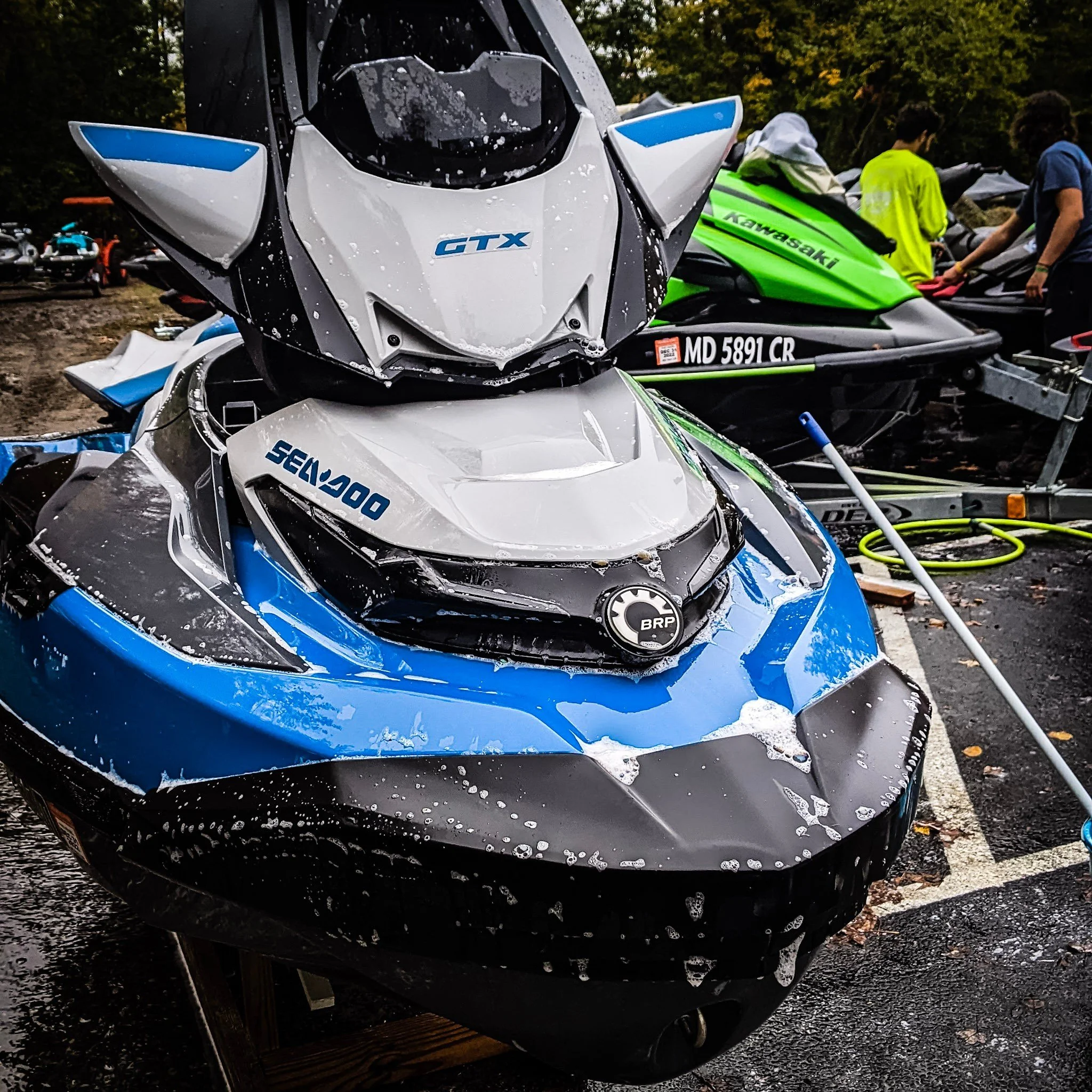
Step 3: Ventilate & Cool (Don’t Seal in the Sweat)
This is the second most common mistake: putting the seat back on and covering the ski while the engine bay is still hot and humid. When you do this, you are creating a perfect, high-salt, "tropical" petri dish for corrosion.
Vent: Immediately after washing, remove the seats.
Cool: Leave the seats off for at least 2–4 hours to let the engine compartment cool down and allow trapped humidity to evaporate. This "airing out" is critical for protecting sensitive sensors and the ECU.
The "Busy Owner" Workaround: If you absolutely do not have time to leave the seats off for a few hours, leave the seats slightly unlatched or loose. This allows at least some air to flow through the compartment while it’s covered, preventing that humidity bomb from sitting on your electronics.
Step 4: The CRC Shield (The Real Magic)
This is the step that separates "Monster Owners" from the casual rider. You need to apply a sacrificial barrier between the water and your metal parts.
At the shop, we rely on CRC 6-56 (or a similar high-quality anti-corrosion marine lubricant). Once the engine bay is relatively dry, you must spray everything:
🔹 The entire engine block
🔹 Wiring harnesses and connectors
🔹 Electrical sensors and the ECU body
🔹 Ignition coils
🔹 Any metal component that has the potential to corrode.
This creates a microscopic, moisture-displacing film that saltwater cannot penetrate. This is your engine’s shield.
Step 5: Cover It (Once It's Actually Dry)
Once you are sure the engine compartment is ventilated, the exterior is dry, and your CRC shield is applied, it’s time to cover it.
Storing your PWC with a quality cover protects it from the other two PWC killers: UV Sun Damage and Yard Clutter. You are keeping rain, sun, and bird droppings off your investment until your next ride.
Step 6: Join the Odyssea Discord Community
Want a model-by-model technical breakdown of the best way to spray down a Spark Trixx vs. a Yamaha GP1800R? Need help choosing the right Salt-Away mixer for your dock?
We created the Odyssea Discord Channel to be the ultimate digital tool for your PWC lifestyle. We have dedicated sections for:
🛠️ Direct Tech Support from Justin and Members
How-To Guides & Videos
Ride Meetups & Community Events
Join the crew and get the answers you need to master your machine!
Final Thoughts from the Shop
We know that a 45-minute routine after a long day on the water can feel like a chore. But we also know that an $800 electrical repair because of a green, corroded sensor connector feels a lot worse. Be consistent. Be relentless. Treat saltwater with respect, and your machine will treat you with a full summer of fun.
